Kashmiri Saffron: Why Pampore Produces the World's Finest Saffron
Saffron (Crocus sativus) is the world's most expensive spice, a literal weight-in-gold commodity. While it is grown in countries like Iran and Spain, Kashmiri Saffron—specifically from the plateau of Pampore—is universally recognized by connoisseurs as the finest, most potent saffron on earth.
With its deep crimson stigmas, honey-like aroma, and bitter-sweet taste, Kashmiri Saffron is the golden thread that weaves through the fabric of Wazwan cuisine and Kashmiri culture.
The Terroir of Pampore: Why is it the Best?
The superiority of Pampore saffron is not merely a matter of pride; it is a scientifically proven fact driven by a unique terroir.
- The Karewa Soil: Pampore is situated on "karewas"—ancient, elevated plateaus formed by the sediment of prehistoric glacial lakes. This highly alkaline, well-drained, and nutrient-rich soil is unique to this specific part of the valley.
- High Altitude & Climate: Grown at an altitude of over 5,200 feet, the crop benefits from chilly autumn nights and dry days. This specific temperature differential triggers the flowers to produce exceptionally high levels of bioactive compounds.
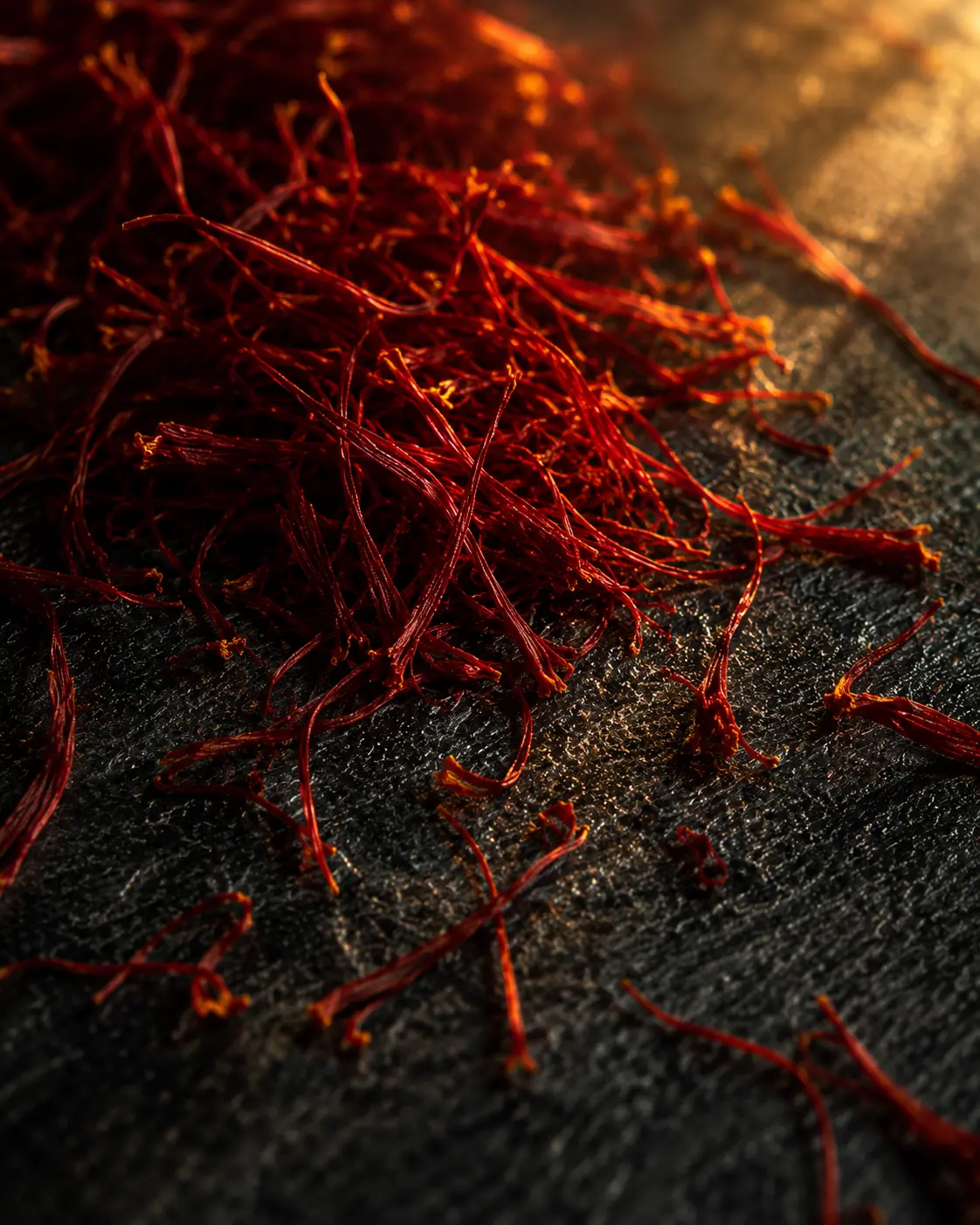
- Chemical Superiority: Kashmiri saffron consistently tops the ISO 3632 international quality standards. It boasts unparalleled levels of Crocin (the pigment providing the deep color), Safranal (the volatile oil giving the intense aroma), and Picrocrocin (responsible for its flavor).
A Labor of Dawn: Cultivation
The harvest, occurring over just a few weeks in late autumn, is a meticulous, multi-generational tradition. The delicate purple flowers bloom overnight. Farmers must rush to the fields before sunrise to hand-pick the blossoms while they are still closed, protecting the volatile essential oils from evaporating under the sun.
Once picked, the painstakingly delicate process of separating the three crimson stigmas from each flower begins. It requires approximately 150,000 flowers—all processed entirely by hand—to yield just one kilogram of saffron.
Saffron in the Royal Wazwan
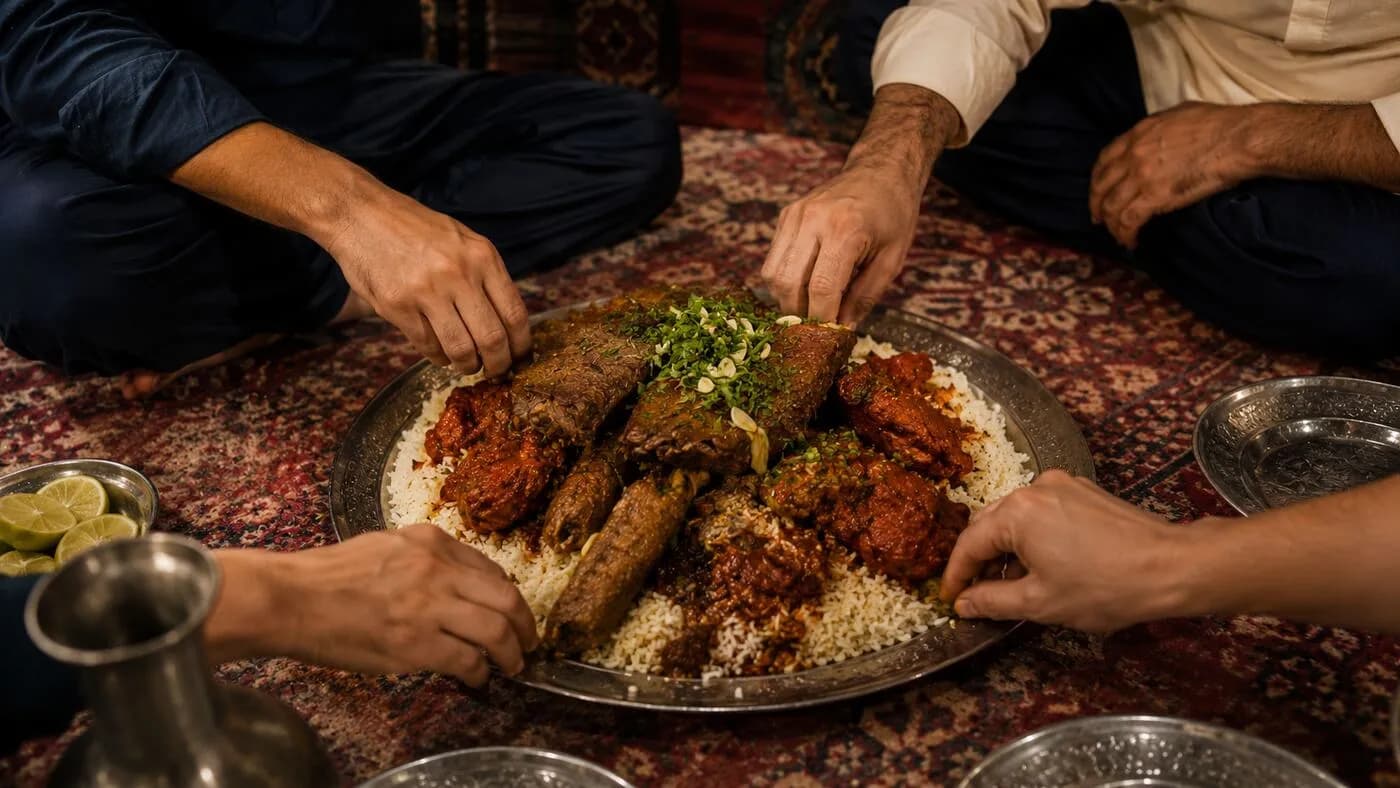
In the Kashmiri Wazwan, saffron is a symbol of immense prestige, hospitality, and celebration. It is never used haphazardly. Master chefs (Vasta Waza) employ precise techniques, such as blooming the saffron strands in warm milk or water, and carefully avoiding boiling it, to preserve its delicate nature.
It imparts an aristocratic golden hue and subtle floral notes to elite dishes like:
- Zafrani Kokur: A rich chicken preparation defined by its saffron-infused gravy.
- Aab Gosht: A mild, soothing milk-based lamb curry.
- Kong Phirin: The traditional semolina and milk dessert served at the feast's conclusion.
The Soul of Kashmiri Kahwa
Beyond the feast, saffron finds its daily expression in Kahwa, the traditional Kashmiri green tea. Brewed in a copper samovar with cardamom and cinnamon, a few strands of saffron transform the brew into a luminous, golden elixir. It provides warmth against the bitter Himalayan winters and serves as the ultimate gesture of welcome to any guest.
Health Benefits
For centuries, Kashmiri traditional medicine has revered saffron. Its high antioxidant profile (via Crocin) helps protect cells against oxidative stress. It is deeply warming, aids in digestion, boosts immunity, and has historically been used to improve mood and alleviate depressive symptoms. In Kashmir, it is also a vital ingredient in bridal Ubtan (skincare pastes) for a radiant glow.